
How to predict a yes or no, an ordered rating or a choice
Source:vignettes/articles/guides/predict-a-yes-or-no-an-ordered-rating-or-a-choice.Rmd
predict-a-yes-or-no-an-ordered-rating-or-a-choice.RmdChoose and run a model for an outcome that is a yes or no, an ordered rating or a choice between categories.
The example in this guide is Will they come back? A customer return-intention study: whether more use of a service predicts that customers return, how satisfied they are and which offer they prefer.
In SurveyStudio
- In RStudio, open the Addins menu, choose
surveyframe: Try a demo and pick
logistic. - On Design, choose Plan. RQ1 predicts returning, a yes or no (binary logistic). RQ2 predicts satisfaction, an ordered rating (ordinal logistic). RQ3 predicts the preferred session type, a choice (multinomial logistic).
- On Analyse, run the plan and report the odds ratios with their intervals.
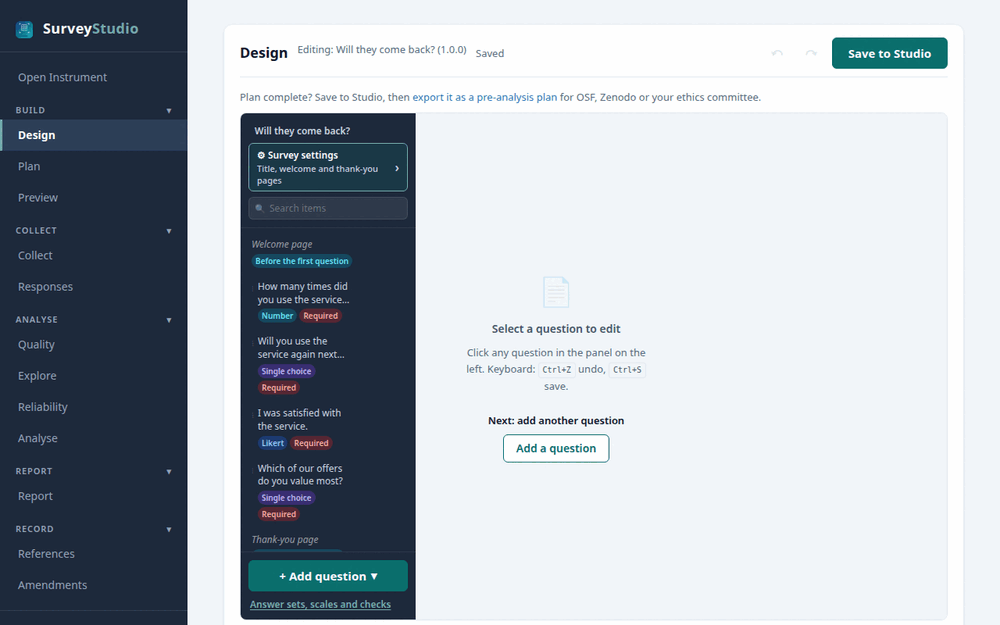
The Design screen with the Will they come back?
study open.
In R
d <- sframe_demo("logistic")
results <- run_analysis_plan(d$responses, d$instrument)
The research questions and what the report gives
| Research question | Method | What the report gives |
|---|---|---|
| Does using the service more predict returning? | Binary logistic regression | The APA 7 sentence and a table, with a chart where the method has one |
| Does attending more sessions predict a higher satisfaction rating? | Ordinal logistic regression | The APA 7 sentence and a table, with a chart where the method has one |
| Does attending more sessions predict which session type an attendee prefers? | Multinomial logistic regression | The APA 7 sentence and a table, with a chart where the method has one |
Run the example in SurveyStudio or R to see the results, each marked as demonstration data.